

Isn’t it fascinating how a well-organized home office can transform your productivity and creativity?
You can create a space that not only meets your functional needs but also reflects your personal style.
By establishing a dedicated area, choosing the right furnishings, and incorporating thoughtful design elements, you’ll set the stage for success.
But what specific strategies can you employ to harmonize functionality and aesthetics in your workspace? Let’s explore the essential steps you can take to achieve this balance.
Setting Up Your Home Office

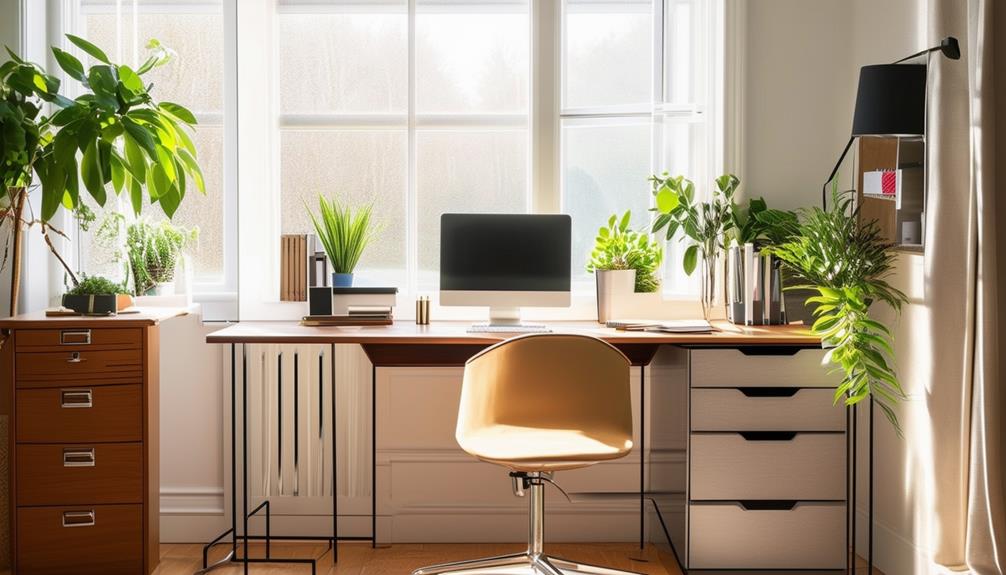
When setting up your home office, it’s essential to establish a dedicated workspace that’s separate from your personal areas. This separation helps maintain a clear work-life balance, allowing you to focus better.
Invest in ergonomic furniture like adjustable desks and supportive chairs to promote healthy posture and reduce fatigue during long hours. Consider incorporating shelf dividers to keep your office supplies organized and hat racks to store your favorite caps.
To keep your workspace clutter-free, implement effective storage solutions such as desk organizers and filing systems. Personalize the office by choosing a calming color scheme and adding decorative elements that reflect your taste, boosting motivation and job satisfaction.
Essential Furnishings and Storage
Creating an efficient workspace requires carefully selecting essential furnishings and storage solutions that enhance both comfort and organization.
Start with high-quality office chairs featuring ergonomic designs to support your posture during long work hours. Next, invest in spacious desks with ample surface area, allowing easy access to your frequently used items, which boosts productivity.
Consider adding a cordless desktop vacuum cleaner to keep your workspace clean and tidy, and a reusable smart notebook to stay organized. Incorporate functional storage solutions like decorative pieces with drawers and desk organizers to keep your workspace clutter-free.
Don’t forget to utilize vertical space through floating shelves and wall-mounted organizers, maximizing your limited floor area while keeping essentials within reach.
Decorating Your Workspace


A well-organized workspace can benefit greatly from thoughtful decoration that enhances both functionality and aesthetics.
When decorating your workspace, consider these home office ideas to create a functional home office that inspires productivity:
- Use calming colors like blues and greens to reduce stress and enhance focus.
- Personalize your office with artwork, motivational quotes, and plants for a mood boost.
- Position your desk near windows to maximize natural light, which increases energy levels.
- Invest in quality desk lamps with adjustable brightness for effective task lighting.
Incorporating decorative storage solutions, like stylish baskets or colorful filing boxes, helps keep your workspace organized while adding visual appeal.
Enhancing Work/Life Balance
To enhance your work/life balance, it’s essential to set clear boundaries between your professional and personal time.
When you work from home, designate a dedicated home office to create a physical separation that helps you mentally switch between work and relaxation.
Establish specific working hours and communicate them to family members to reduce interruptions.
Incorporate productivity practices, like setting measurable goals and outlining daily tasks, to maintain focus during work hours.
Schedule regular breaks to recharge and prevent burnout, supporting a sustainable work/life balance.
Ultimately, engage in self-care activities, such as exercise or mindfulness, to boost your well-being.
Effective Organizational Strategies

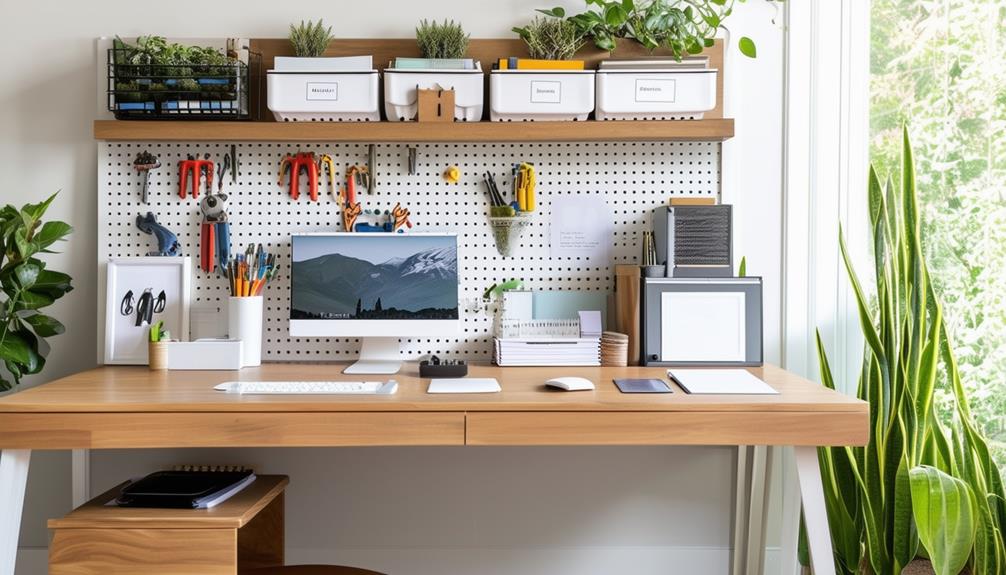
To create an effective organizational system in your home office, start by evaluating your storage needs to figure out what items you truly need on hand.
Streamlining your desk organization and implementing effective labeling can make a world of difference in keeping your workspace efficient and functional.
Assessing Storage Needs
When organizing your home office, it’s crucial to evaluate your storage needs effectively. Start by inventorying all items in your workspace, categorizing them into essential groups. This helps in identifying specific storage solutions.
Consider these points:
- Evaluate the physical dimensions of your workspace.
- Determine ideal types and sizes of storage solutions.
- Think about how often you use each item.
- Embrace a minimalist approach for better organization.
Aim to place frequently accessed tools within easy reach while utilizing vertical storage options like shelves to maximize space efficiency.
Streamlining Desk Organization
Organizing your desk is a natural next step after reviewing your storage needs. Start by implementing a desktop organization system with drawer dividers and desktop trays to reduce clutter. This guarantees every item has a designated space, enhancing your productivity.
Don’t forget about cable management; using cord clips and trays keeps wires tidy and reduces hazards. Incorporating vertical storage options, like wall-mounted shelves or pegboards, maximizes your limited desk space while keeping frequently used items within easy reach.
Regularly declutter by evaluating each item’s necessity—aim for a thorough check at least once a month. Finally, labeled storage boxes for office supplies streamline organization, making it easier to locate essentials and maintain an efficient workspace.
Implementing Effective Labeling
Effective labeling is essential for maintaining an organized workspace, enabling you to quickly identify and access your supplies.
By implementing effective labeling strategies, you can streamline your organization and enhance functionality. Here are some key tips:
- Use color-coded labels for visual distinctions between categories.
- Incorporate both text and icons to cater to different learning styles.
- Invest in durable, water-resistant labels to withstand spills and wear.
- Regularly maintain labels to reflect any changes in contents.
These strategies not only reduce the time spent searching for items but also promote a consistently efficient workspace.
With clear, functional labeling, you’ll create an environment where everything has its place, making your home office more productive and enjoyable.
Importance of Color and Lighting
Transforming your home office with the right colors and lighting can greatly enhance your productivity and creativity.
Color psychology shows that cool tones, like blues and greens, can improve focus, while warm tones, such as yellows and oranges, stimulate energy and creativity.
Pairing these colors with proper lighting, especially natural light, can boost your mood considerably. Studies reveal that sunlight exposure increases workplace satisfaction, making your space more inviting.
Additionally, using layered lighting—ambient, task, and accent—creates a versatile atmosphere tailored to various tasks while enhancing the overall aesthetic.
Incorporating Technology and Resources

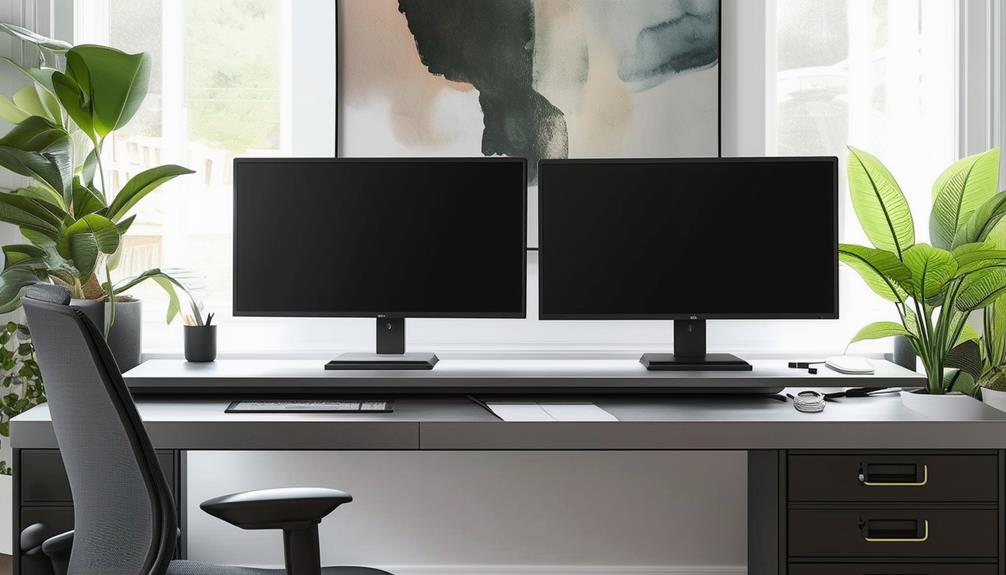
A well-designed home office goes beyond color and lighting; it also integrates technology and resources that enhance your workflow.
By incorporating these elements, you can create a functional and inviting workspace:
- Use cloud storage solutions for efficient digital organization, making important documents accessible from any device.
- Utilize project management apps like Trello or Asana to streamline task organization and collaboration.
- Implement smart home devices such as voice-activated assistants to improve workflow efficiency with hands-free task management.
- Invest in ergonomic accessories to optimize workspace ergonomics, promoting better posture and reducing strain.
Regularly evaluating and updating these tools guarantees your home office remains efficient and aligned with your evolving work needs, ultimately fostering a productive environment.
Frequently Asked Questions
How to Create a Functional and Stylish Home Office?
To create a functional and stylish home office, invest in ergonomic furniture, establish workspace zoning, utilize decorative storage, embrace a cohesive color palette, maximize natural lighting, integrate technology, and add personal touches to inspire creativity.
How Do You Make an Aesthetic Office?
Did you know that a well-decorated office can boost productivity by up to 20%? Choose calming color schemes, stylish storage solutions, ergonomic furniture, and wall art, while considering lighting options and plant placement for an aesthetic office.
How Do You Create a Functional Workspace?
To create a functional workspace, prioritize workspace essentials, integrate technology, and use productivity tools. Implement organization hacks, apply decluttering tips, and guarantee an ergonomic setup while adding personal touches to enhance focus and comfort.
How Do You Structure a Home Office?
Structuring your home office starts with smart storage solutions and ergonomic furniture. Consider color schemes and lighting options that inspire creativity, while adding decorative accents to enhance aesthetics, ultimately optimizing your workflow for productivity.


