


When you’re looking to mix and match decor styles in a single room, it’s essential to start by selecting a primary style that sets the tone. You can then incorporate a secondary style to add depth and interest. Consider creating a focal point with a standout piece that draws the eye, while also maintaining a consistent color palette for cohesion. Balancing different textures and shapes will keep the space engaging, but knowing how to navigate these choices can be tricky. What strategies can you employ to guarantee everything feels intentional rather than chaotic?
Key Points
- Choose a primary style to dominate the decor and a secondary style for accent pieces to create visual interest.
- Establish a unifying theme, such as “bohemian chic” or “industrial vintage,” to harmonize mixed styles.
- Use unexpected statement pieces, like a bold artwork or unique furniture, to serve as focal points within the room.
- Maintain a consistent color palette that blends the different styles, starting with neutral tones for cohesion.
- Incorporate varied textures and heights in decor elements to achieve visual balance and intrigue throughout the space.
Select Primary and Secondary Styles

Selecting your primary and secondary decor styles is essential for creating a cohesive and visually appealing space. Start by choosing a primary style that will dominate your room’s furniture and fixtures, ensuring a cohesive look. This should make up about 80% of your decor.
Next, select a secondary style to accentuate the primary one, typically used for statement pieces like art, pillows, and decor. Consider incorporating organizers for closet storage to maximize your space and create a sense of harmony. For instance, using shelf dividers or hanging closet organizers can help maintain a clutter-free environment.
This approach allows for visual interest without overwhelming the space. For example, if your primary style is vintage wooden furniture, consider modern geometric decor accents as your secondary style. Mixing design styles this way not only unifies the room but also expresses your personality, incorporating elements that resonate with your tastes.
Make a Focal Point
Creating a focal point in your space can really elevate its style and character. Think about incorporating unexpected statement pieces, like a bold piece of art or a unique vintage chair, to enhance visual interest and draw the eye.
Consider adding rustic charm with distressed finishes or vintage designs to create a cozy atmosphere. By making intentional design choices, you can guarantee that your focal point not only stands out but also complements the overall decor, making your room feel cohesive and inviting.
Unexpected Statement Pieces
When you want to elevate your space, incorporating unexpected statement pieces can really make a room pop.
These items act as focal points that draw attention and can transform your decor into something special. By introducing these unique pieces, you create an eclectic atmosphere that reflects your personal style.
To effectively highlight a statement piece, keep these tips in mind:
- Choose an antique piano that contrasts with modern furniture.
- Hang a vibrant piece of art that stands out against neutral walls.
- Use a mismatched chair that adds character to a cohesive seating area.
Enhance Visual Interest
Unexpected statement pieces not only draw the eye but can also serve as the foundation for enhancing visual interest throughout your space.
To create a strong focal point, consider incorporating an unexpected item like a vintage armchair or a bold piece of art. Choose pieces with contrasting textures and colors that stand out against your existing color palette, adding visual intrigue.
Position your focal point strategically, perhaps opposite the main entryway or near a fireplace, ensuring it captures attention immediately. Use lighting, such as a decorative lamp or spotlight, to highlight this feature.
Intentional Design Choices
A well-placed focal point can transform a room, making it feel both inviting and dynamic. By intentionally selecting standout pieces, you can create visual interest that draws attention and sparks conversation.
Consider using items like an antique piano, a bold art piece, or a unique sculpture to enhance your decor.
- Choose mismatched items to showcase your personality.
- Guarantee colors or textures echo throughout the room for harmony.
- Use the focal point to guide your overall design choices.
These curated pieces not only add character but also make your design choices appear deliberate.
Balancing your focal point with complementary elements guarantees a cohesive blend of styles, making the space feel thoughtfully arranged and inviting.
Define a Unifying Theme
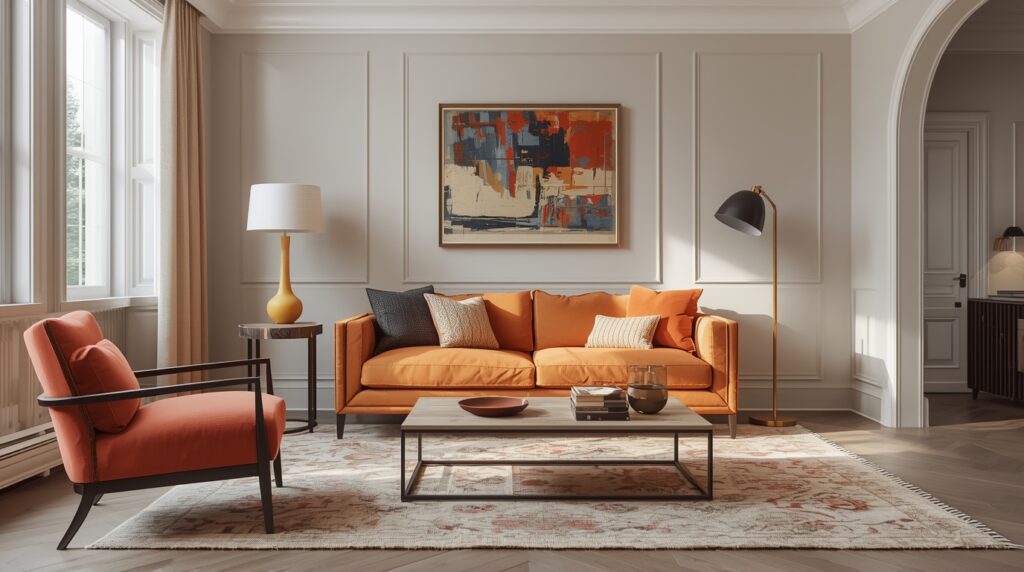
Creating a unifying theme in your space sets the foundation for blending different decor styles seamlessly. By choosing a theme, like “beach house” or “urban chic,” you can create a cohesive atmosphere that masks clashing furniture styles. Thematic elements, such as color schemes and decorative motifs, bridge gaps and foster harmony.
| Element | Examples | Purpose |
|---|---|---|
| Color Schemes | Blues, Neutrals | Create a calming vibe |
| Decorative Motifs | Shells, Geometric | Add personality and interest |
| Accent Pieces | Textiles, Artwork | Enhance the overall aesthetic |
In children’s rooms, a defined theme sparks creativity and allows for mismatched furniture. Remember, you can adjust your theme as your tastes evolve, keeping your space fresh and inviting.
Achieve Visual Balance
Once you’ve established a unifying theme, the next step is to confirm visual balance in your space. This involves pairing heavier furniture pieces with substantial counterparts, creating a harmonious weight distribution.
Varying the heights of decor elements, like tall lamps next to shorter tables, adds interest and breaks monotony. Effective use of negative space reduces clutter and lets each piece shine.
Consider incorporating multi-functional furniture pieces to maximize functionality while maintaining visual balance. Also, utilize vertical space with shelves for efficient storage and keep items organized with drawer organizers for easy access.
- Implement symmetry with matching pairs of chairs or lamps.
- Consider the scale and proportion of your furniture for a cohesive aesthetic.
- Mix and match styles thoughtfully to confirm no single design overwhelms the room.
Maintain a Consistent Color Palette


Maintaining a consistent color palette is essential for achieving visual harmony when mixing decor styles. Start with a solid foundation of neutral tones, which help blend various styles seamlessly.
Then, choose 2-4 accent colors to create an inviting atmosphere. You can apply the 70/20/10 color rule: let 70% of your room feature a dominant color, 20% a secondary color, and 10% for accents. This approach enhances depth and interest, making your space feel cohesive.
Always consider how new decor pieces fit within your established color scheme to avoid visual clutter. By doing this, you’ll bridge gaps between contrasting styles, ensuring your room feels thoughtfully designed and harmoniously put together.
Embrace Flexibility in Design
How can you make your space truly yours? Embracing flexibility in design allows you to explore mixing styles that resonate with you.
Break away from traditional rules to discover unexpected combinations, like pairing vintage pieces with a modern aesthetic. This approach not only creates visual interest but also reflects your personality.
Here are some ideas to inspire you:
- Contrast elements: Place a sleek modern lamp next to a rustic wooden table.
- Evolve your space: Regularly reassess your decor to maintain freshness.
- Be spontaneous: Allow unplanned pairings to highlight the character of both styles.
Frequently Asked Questions
Can You Have Different Decor Styles in Each Room?
Absolutely, you can embrace eclectic decor in each room! By focusing on color coordination and maintaining a harmonious balance, you’ll achieve personal expression while ensuring functional aesthetics shine through in your unique spaces.
Can You Mix Furniture Styles in One Room?
You can absolutely mix furniture styles in one room! Embrace eclectic furniture by blending vintage accents with modern minimalism, adding rustic charm and bohemian touches to create a unique, inviting space that reflects your personality.
Can You Mix Different Styles of Art in the Same Room?
Absolutely, you can mix different art styles in the same room. Just focus on balancing boldness through cohesive themes and color palette integration. This approach enhances personal expression while creating an engaging visual experience.
How to Merge Interior Design Styles?
Don’t worry about clashing styles; you can create eclectic designs! Focus on color coordination, texture balance, and strong focal points, then add personal touches to make your space uniquely yours and harmonious.


