

Thorough cleaning your kitchen floors is crucial for both hygiene and appearance. It’s not just about mopping; it involves removing dirt and grime that can accumulate over time.
Start by clearing the space and picking the right cleaning solution based on your floor type. Then, implement effective techniques to make certain every corner sparkles.
Wondering how to tackle those stubborn stains or maintain that fresh look? Let’s explore the best methods together.
Importance of Deep Cleaning Kitchen Floors

When you step into your kitchen, you mightn’t realize just how much dirt and bacteria are hiding beneath your feet.
Thorough cleaning your kitchen floors is essential for hygiene, reducing those unseen germs that can cause foodborne illnesses.
Regular cleanings not only improve the aesthetic appeal but also extend the lifespan of your floors by removing dirt and grime that can damage them.
Preparing for a Deep Clean

Preparing for a thorough clean of your kitchen floor requires a bit of organization, but it’s well worth the effort.
Start by removing all furniture and items to clear your space.
Next, sweep or vacuum to gather loose dirt.
Prepare a bucket with warm water and your chosen cleaning solution, along with microfiber cloths to dry and remove any residue for a sparkling finish.
Best Cleaning Solutions for Different Floor Types

Once you’ve cleared your space and gathered your cleaning supplies, it’s time to focus on which cleaning solutions work best for your specific kitchen floor type.
For wood floors, use a cleaning solution of castile soap and hot water.
For tile, mix white vinegar and warm water.
Don’t forget to thoroughly clean grout too!
Ultimately, mop the floor with care to maintain your flooring materials.
Deep Cleaning Techniques for Tile Floors

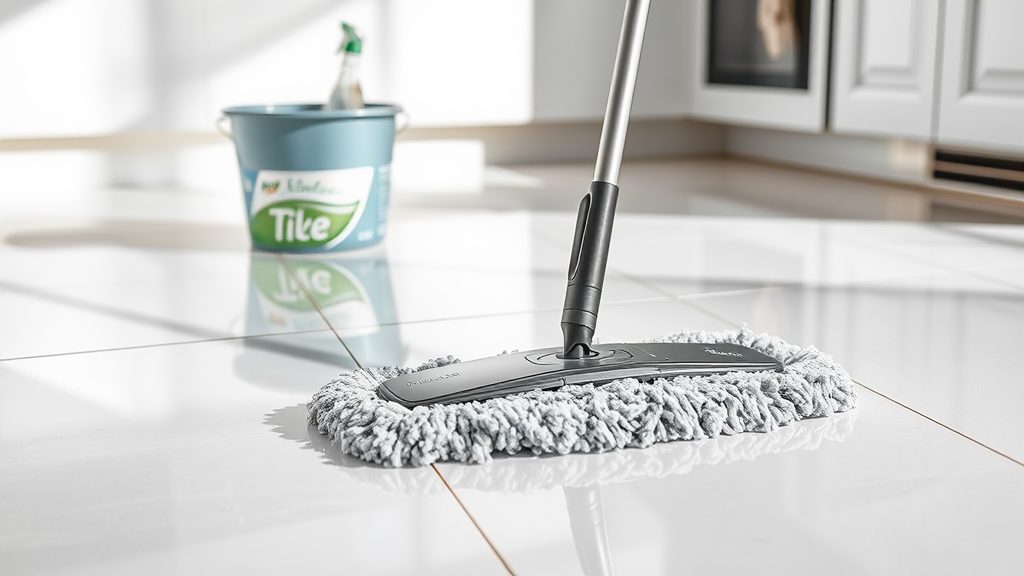
Thorough cleaning tile floors can feel like an intimidating task, but with the right techniques, you can transform your kitchen into a sparkling space.
Start by sweeping away dirt, then mix 1/4 cup vinegar in a gallon of warm water as your cleaning solution.
Mop gently, scrub stubborn grout lines, and finish with a clean, dry mop to keep everything looking fresh and inviting.
Deep Cleaning Methods for Hardwood Floors
When it comes to profound cleaning hardwood floors, starting off right is essential for preserving their beauty and longevity.
Begin by sweeping or vacuuming, then mix 1/4 cup of vinegar and water as your cleaning agent.
Use a soft mop to gently damp-mop, avoiding excess moisture.
Ultimately, dry the floor immediately with a clean, dry mop to guarantee lasting luster and integrity.
Effective Strategies for Vinyl and Linoleum Floors


To keep your vinyl and linoleum floors looking their best, you’ll want to adopt a few effective cleaning strategies that not only maintain their appearance but also extend their lifespan.
Start by sweeping or vacuuming to remove debris.
Use a cleaning solution of vinegar and water with a damp mop, then dry with a soft cloth to avoid streaks and prevent water damage.
Using Natural Cleaning Alternatives
Using natural cleaning alternatives can be a game changer for maintaining the cleanliness of your kitchen floors.
A mixture of equal parts white vinegar and warm water is a gentle yet effective solution for most surfaces. It’s also a safe choice for pet-friendly homes.
Just remember to do some spot testing, especially on hardwood, to avoid any damage while cleaning.
Maintaining Clean Floors After Deep Cleaning
After you’ve put in the effort to thoroughly clean your kitchen floors, keeping that fresh look and feel is a top priority.
Establish a regular cleaning routine by sweeping or vacuuming daily to prevent dirt buildup. Spot-clean any spills or stains immediately.
Use easy-to-clean floor mats at entrances, and schedule a thorough clean at least once a month to maintain cleanliness.
Tips for Spot Cleaning and Immediate Care


Even when you maintain a regular cleaning routine, spills and stains can happen in the kitchen; that’s why knowing how to spot clean effectively is essential.
For immediate care, blot spills with a clean cloth and use a mild all-purpose cleaner for dirt and grime.
Avoid abrasive cleaners, and regularly check high-traffic areas to keep your kitchen inviting and fresh.
Recommended Tools for Deep Cleaning Kitchen Floors

To keep your kitchen floors looking their best, having the right tools can make all the distinction.
Start with a high-quality microfiber mop for effective cleaning, a bucket to mix your cleaning solutions, and a vacuum cleaner to clear debris first.
Don’t forget a grout brush for those stubborn spots and soft cloths for a streak-free finish.
Your kitchen deserves it!
Frequently Asked Questions
What Is the Best Way to Clean a Dirty Kitchen Floor?
To clean a dirty kitchen floor, start with sweeping or vacuuming, then apply DIY solutions customized for your floor materials. Incorporate safety precautions, employ proper cleaning supplies, and follow maintenance tips for effective stain removal and sanitation.
How Do You Remove Buildup From a Kitchen Floor?
To remove buildup from your kitchen floor, try eco-friendly cleaners and floor scrubbing methods. Use mopping techniques regularly, and remember floor maintenance tips to prevent stubborn stains and keep your space welcoming and clean.
What Is the Best Thing to Deep Clean Floors With?
For thorough cleaning floors, consider eco-friendly options like natural cleaning solutions. Use effective floor cleaning products, and explore steam cleaning benefits. Regular mopping techniques help with stubborn stains removal, adapted for various kitchen floor types.
How Do You Mop a Very Dirty Floor?
When you mop a very dirty floor, use the right cleaning solutions for your floor materials. Utilize effective mop techniques for dirt removal, focusing on stubborn stains and maintaining a consistent cleaning frequency for better floor maintenance.


