

If you find yourself struggling with sticky cabinets that seem to have a mind of their own, fret not – there’s a simple solution at your fingertips.

By utilizing common household items and a few clever techniques, you can banish that sticky mess and have your cabinets looking pristine once more. Stick around to uncover the secrets to effortlessly restoring your cabinets to their former glory.
Basics of Cleaning Sticky Cabinets

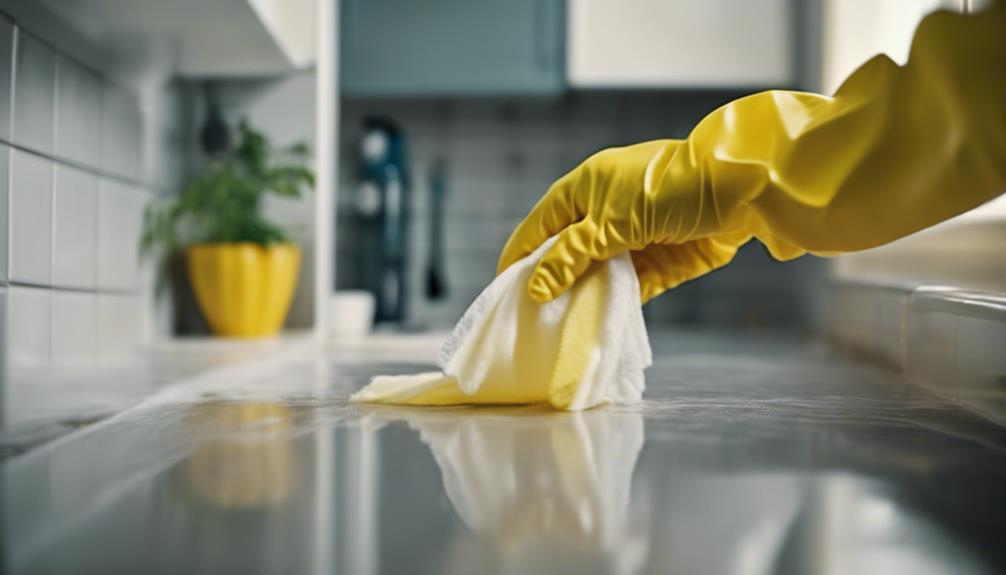
For cleaning sticky cabinets effectively, start by using a mixture of warm water and dish soap. This simple yet powerful combination can work wonders in breaking down the sticky residue on your cabinets. The warm water helps to loosen the sticky grime, while the dish soap cuts through the grease and dirt, leaving your cabinets clean and refreshed.
If you encounter stubborn spots, consider creating a paste with baking soda and scrubbing it with a toothbrush for that extra cleaning power. This method can help tackle those tough areas that just won’t budge with regular cleaning.
After using the warm water and dish soap mixture or the baking soda paste, wipe down the cabinets with a cloth dampened in vinegar and water to remove any remaining sticky residue. This final step guarantees that your cabinets aren’t only clean but also free from any lingering stickiness.
Removing Stubborn Grease Buildup
Consider scrubbing stubborn grease buildup on cabinets with a baking soda paste and a toothbrush for effective removal. Grease can be tough to tackle, especially on wood cabinets, but the cleaning power of baking soda can work wonders.
Mix baking soda with a bit of water to create a paste, then apply it to the greasy spots on your cabinets. Gently scrub the affected areas with a toothbrush, using circular motions to loosen the grease. The abrasive texture of baking soda helps to break down the grime, while the toothbrush allows you to target specific areas with precision.
For an extra boost, you can also try using vinegar instead of baking soda. Vinegar’s acidity can cut through grease and grime effectively. Remember, removing stubborn grease buildup may require some elbow grease, but the results will leave your cabinets looking clean and refreshed.
Using Natural Products for Cleaning
Natural products like baking soda and vinegar offer effective and eco-friendly solutions for cleaning sticky residue on cabinets.
When tackling grease stains and stubborn messes on wood surfaces, consider using these natural cleaning agents for a fresh and chemical-free clean:
- Baking Soda and Water: Create a paste using baking soda and water to gently scrub away sticky residue without damaging the wood finish. This natural abrasive will help lift the stickiness effectively.
- White Vinegar: Mix equal parts of white vinegar and water in a spray bottle to create a natural degreaser. Spray the solution on the sticky areas and wipe clean with a damp cloth for a shiny, residue-free surface.
- Lemon Juice Mixture: Combine warm water with lemon juice to break down grease and grime on cabinets. The natural acidity of lemon juice aids in cutting through tough sticky spots, leaving your cabinets clean and fresh.
Using these natural solutions not only cleans your cabinets effectively but also helps maintain their natural beauty without harsh chemicals.
Deep Cleaning Wood Cabinets
When tackling thorough cleaning for wood cabinets, utilize dish soap and warm water to effectively remove sticky messes and grease buildup. Start by mixing a few drops of dish soap in a bucket of warm water. Dip a soft cloth into the solution and gently scrub the cabinets, focusing on areas with stubborn residue.
For those tough, sticky spots, create a paste using baking soda and water. Carefully scrub the stains with a toothbrush to lift the grime without damaging the wood finish.
After cleaning, wipe down the cabinets with a cloth dampened with vinegar and water to make certain all soap residue is removed. To maintain the shine and finish of your wooden kitchen, re-moisturize the cabinets with a light application of linseed oil.
Regular deep cleaning not only helps remove grease and sticky buildup but also prolongs the life of your cabinets, keeping them looking fresh and inviting for years to come.
Pro Tips for Maintaining Clean Cabinets

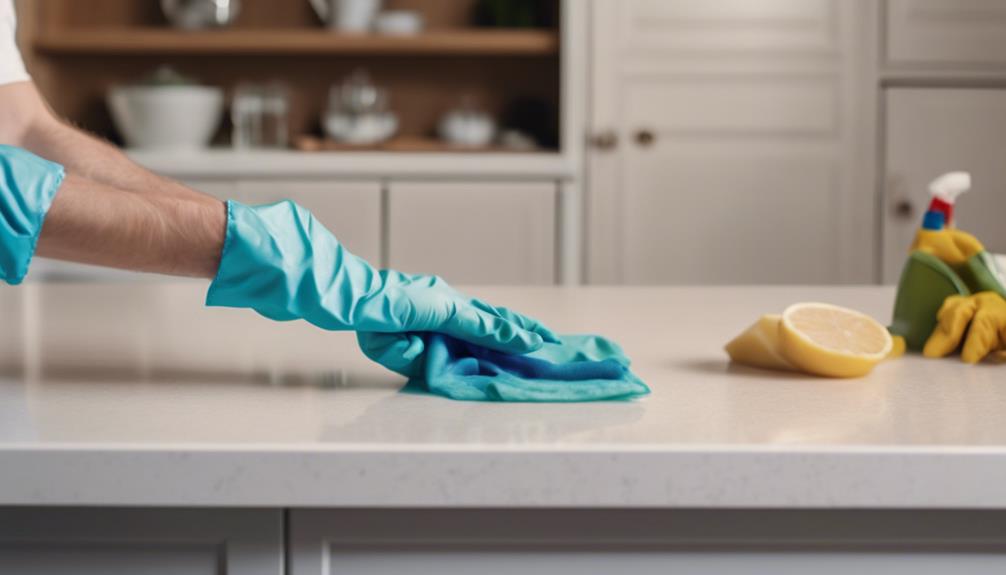
Regularly wipe down your cabinets with warm, soapy water to prevent sticky buildup and maintain a clean appearance.
To keep your kitchen cabinets looking pristine, here are some pro tips for maintaining their cleanliness:
- Use a baking soda paste: When faced with stubborn sticky grease on your cabinets, mix baking soda with water to form a paste. Gently scrub the affected areas with an old toothbrush to remove the stickiness effectively.
- Try vinegar and water: For a natural and effective cleaning solution, combine vinegar and water in a spray bottle. Use this mixture to wipe down your cabinets after removing any sticky residue to leave them sparkling clean.
- Apply linseed oil: After cleaning your cabinets, consider applying a thin coat of linseed oil to rejuvenate and protect the wood surface. This step can help maintain the beauty and integrity of your cabinets over time.
Frequently Asked Questions
How to Get Sticky Stuff off Cabinets?
To get sticky stuff off cabinets, start by wiping the surface with a wet rag. If it’s still sticky, add a bit of dish soap to the rag and scrub. For tough spots, try a cleaning chemical like 409 or Mr. Clean.
How Do You Clean Sticky Greasy Kitchen Cabinets?
When cleaning sticky greasy kitchen cabinets, start by wiping with a damp rag. If stickiness lingers, mix water and dish soap. For tough spots, scrub with baking soda paste. Rinse with vinegar water. Replenish shine with linseed oil.
How Do You Clean Kitchen Cabinets Without Removing the Finish?
To clean kitchen cabinets without removing the finish, start by using a gentle mixture of warm water and mild dish soap. Avoid harsh chemicals. Wipe with a soft cloth or sponge. Consider natural solutions like white vinegar or baking soda for effective cleaning.
How Do You Degrease Wood Cabinets?
To degrease wood cabinets effectively, start by using a mixture of warm water and mild dish soap. Scrub sticky areas with a toothbrush and baking soda paste for tough stains. Wipe down with vinegar solution. Re-moisturize with linseed oil after cleaning.


