

When it comes to cleaning laminate wood floors, you’ll want to adopt a routine that keeps them looking their best.
Begin with regular sweeping and vacuuming to eliminate dirt and debris.
For more thorough cleaning, a simple vinegar and water solution can work wonders. Remember, using the right techniques is essential to avoid damaging the surface.
Stay tuned, as we’ll explore various cleaning methods to keep your floors pristine and extend their lifespan.
Establish Weekly Cleaning Habits
To keep your laminate wood floors looking their best, it’s essential to establish a routine for weekly cleaning.
Start by sweeping with a soft-bristle broom to collect dust and pet hair.
Vacuum weekly, adjusting your cleaning frequency in sandy or high-traffic areas.
Don’t forget daily spot cleaning for spills and debris to maintain your floors and prevent damage.
Consistency is key!
Deep Clean Occasionally
While weekly cleaning is essential for maintaining your laminate wood floors, don’t overlook the importance of an occasional thorough clean.
To intense clean laminate floors, mix 1 gallon of hot water with vinegar and a few drops of dish soap.
Use an almost dry microfiber mop to avoid excessive water and standing water.
Finish by using a clean, dry microfiber towel to prevent damage.
Spot Treat Stains
Spot treating stains on your laminate wood floors is essential for keeping them looking their best.
Blot spills immediately with a microfiber cloth to prevent stains. For hardened substances, use an ice pack to freeze them, then scrape off with a plastic tool.
Treat oily spots with acetone or nail polish remover, and finish with a damp microfiber cloth.
Regularly check for stains to avoid moisture damage.
Protect Your Flooring

Protecting your laminate wood floors is essential to maintaining their beauty and longevity.
Place protective mats at entryways to reduce dirt and debris, and use felt pads under heavy furniture to prevent scratches.
Trim pet nails regularly and avoid wearing hard-soled shoes indoors.
Additionally, consider area rugs in high-traffic zones for extra protection and to help maintain cleanliness on your laminate surface.
Materials Needed for Cleaning
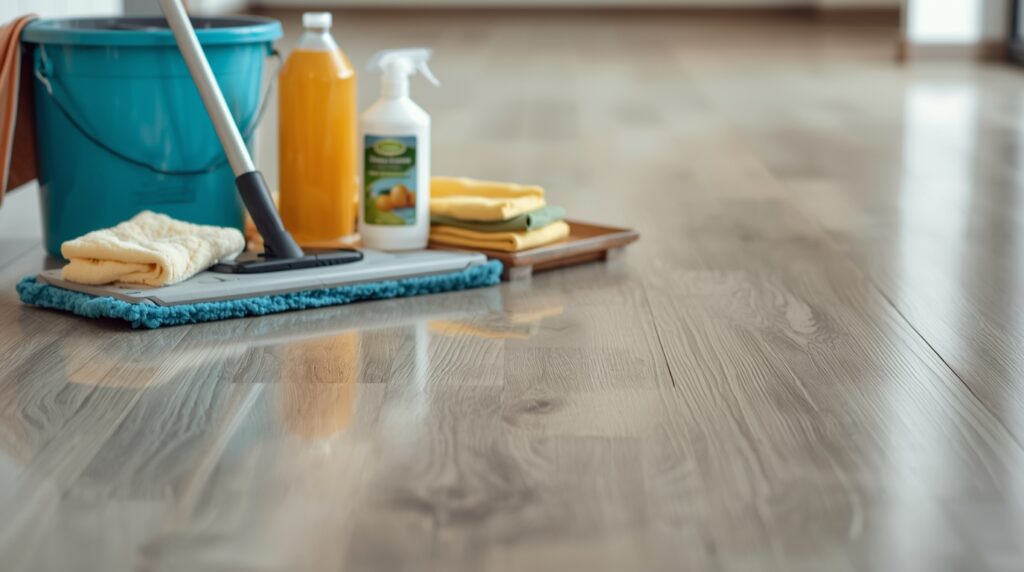
Cleaning your laminate wood floors effectively requires just a few essential materials that make the task much simpler.
You’ll need a soft-bristled broom for regular sweeping, a microfiber mop with a mop head to trap dirt, and a homemade cleaning solution of distilled white vinegar, dish soap, and hot water.
Don’t forget a microfiber cloth for immediate spill cleanup and to avoid excess moisture.
How to Clean Laminate Floors
To keep your laminate floors looking their best, it’s essential to establish a simple yet effective cleaning routine.
Regular maintenance means sweeping or vacuuming weekly to avoid scratches.
For more thorough cleaning, use a vinegar solution with a damp microfiber mop.
Always spot clean spills immediately, and avoid harsh cleaners.
Thoroughly clean every two to three months to maintain that beautiful finish!
How to Remove Scuffs From Laminate Floors


Scuffs on laminate floors can be an eyesore, but getting rid of them doesn’t have to be a hassle.
To remove scuffs from laminate, start by sweeping away debris. Use a microfiber cloth for gentle buffing.
For sticky substances, freeze and gently scrape with a plastic knife. If stubborn spots remain, mix lukewarm water and vinegar to help restore luster without risking damage.
Avoid abrasive tools!
Techniques for Stain Management
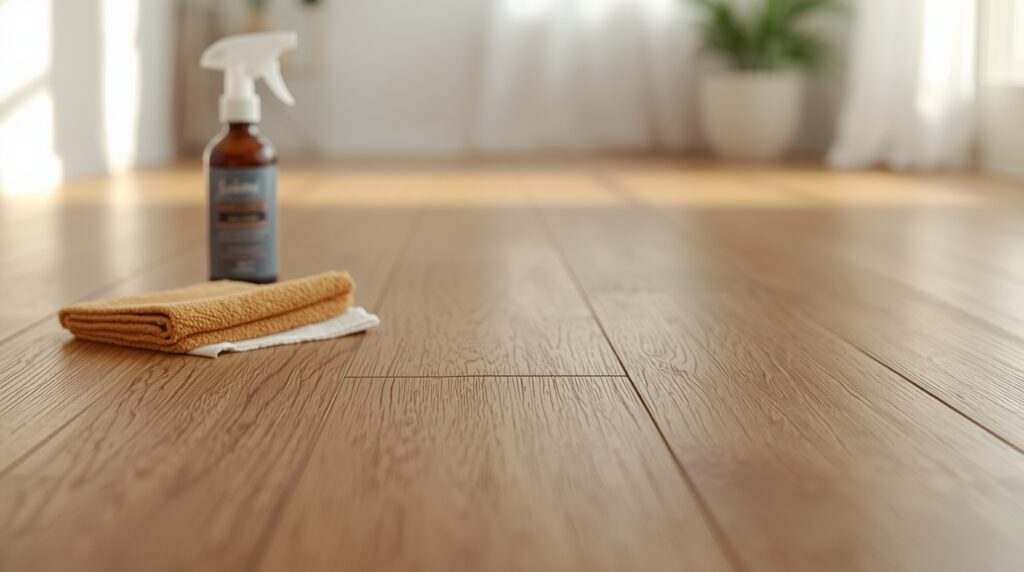
Stains on laminate wood floors can feel like a constant battle, but you can manage them effectively with the right techniques.
Always blot spills immediately with a microfiber cloth to prevent stains.
For stubborn stains, use rubbing alcohol. A mixture of lukewarm water and vinegar works for general removal.
Don’t forget to test any solution first to safeguard your surface finish!
Preventing Streaks and Dullness
Managing stains effectively is just one part of keeping your laminate wood floors looking pristine.
To prevent streaks and dullness, always use a microfiber mop and avoid excess water. Regular vacuuming helps remove dirt that can scratch surfaces.
For a clean finish, stick with a mild solution, like one tablespoon of detergent in a gallon of water, and steer clear of oil-based cleaners.
DIY Cleaning Solutions for Laminate Floors
Keeping your laminate floors clean doesn’t have to be a chore, especially when you can make your own effective cleaning solutions right at home.
Mix one gallon of warm water with one cup of distilled white vinegar and a few drops of mild dish soap for gentle cleaning.
Always test solutions first, and avoid abrasive tools.
Use microfiber mops for the best results while maintaining your floors!
Frequently Asked Questions
What Is the Best Thing to Clean Laminate Wood Floors With?
For cleaning laminate floors, use eco-friendly cleaners and safe products that provide a streak-free gloss. Incorporate routine cleaning with soft-bristled brooms or microfiber mops, ensuring effective floor maintenance and protection against stubborn stains from daily activities.
Can You Use Swiffer Wet on Laminate Wood Floors?
Yes, you can use Swiffer Wet mops on laminate floors. Just make certain you use compatible cleaning solutions, avoid excess water usage, and regularly change Swiffer pads to maintain a streak-free luster and prevent residue buildup.
Is Flash Mop Ok for Laminate Floors?
Yes, a Flash Mop’s effectiveness can improve your laminate floor maintenance. Just make certain you choose safe cleaning solutions, avoid excess moisture, and use it regularly for ideal durability, streak-free results, and proper laminate floor care.
How Do You Clean Laminate Floors Without Damaging Them?
To clean laminate floors without damaging them, use eco-friendly solutions and proper cleaning tools. Regular maintenance, floor protection, and avoiding common mistakes guarantee you prevent stubborn stains and preserve your floors’ beauty for years.


