

Cleaning your floors with vinegar is not only effective but also an eco-friendly option that many swear by.
To get started, you’ll want to create a simple cleaning solution by mixing vinegar with warm water. This method can help eliminate dirt and grime without harsh chemicals.
However, it’s important to know which surfaces are safe to clean with vinegar and the best techniques to use. Let’s explore the specifics to guarantee you achieve sparkling results!
Benefits of Using Vinegar for Floor Cleaning
When it comes to cleaning your floors, choosing vinegar as your go-to solution offers a range of benefits that make the task easier and more effective.
Vinegar’s acetic acid naturally disinfects and breaks down grime, making your DIY floor cleaning safe for households with kids and pets.
Plus, it’s cost-effective, keeping your home fresh without the need for expensive cleaners.
How to Make a Vinegar Cleaning Solution
Creating a vinegar cleaning solution is both simple and effective, making it a great choice for maintaining your floors.
To make a vinegar cleaning solution, mix equal parts distilled white vinegar and water for general cleaning.
For tougher spots, try using one-half cup of vinegar with one gallon of warm water.
Always verify it’s properly diluted to safely achieve clean floors!
Using Vinegar for Specific Floor Types

Using vinegar to clean your floors can be a revolutionary shift, especially since different types of flooring require specific approaches.
For tile floors, mix ½ cup vinegar with a gallon of warm water.
For linoleum, use 1 cup vinegar in hot water.
Sealed hardwood floors can handle a vinegar solution too, but avoid it on granite, marble, and waxed surfaces to prevent damage.
Mopping Techniques With Vinegar

Mopping your floors with a vinegar solution can be both effective and straightforward, especially if you follow a few key techniques.
Mix ½ cup of vinegar with one gallon of warm water for proper dilution.
Use a wet mop soaked in this mopping solution, wringing it out to avoid excess moisture.
Rinse frequently to keep your floor cleaning efficient and avoid spreading dirt.
Surfaces You Should Avoid With Vinegar

While vinegar is a powerhouse for cleaning many surfaces, it’s important to know where it shouldn’t be used.
Avoid using vinegar on natural stone like granite or marble, as its acidic properties can damage them.
Don’t apply it to laminate flooring or waxed finishes, since it can cause discoloration and dullness.
Always conduct a patch test to guarantee safety with any new cleaning products!
Tips for Dealing With Vinegar’s Odor
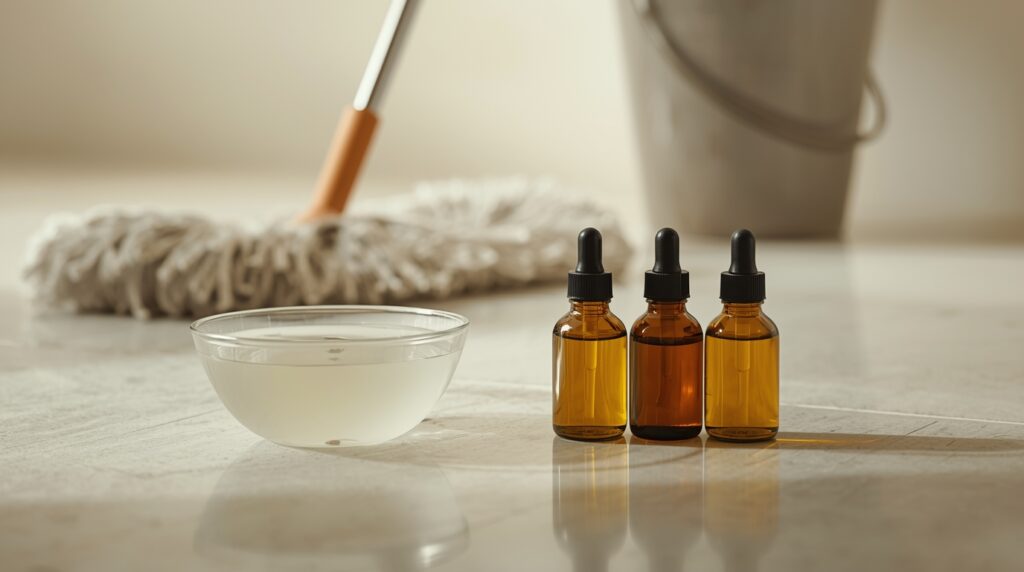
Have you ever noticed how strong vinegar’s smell can be during cleaning?
To make it more enjoyable, add a few drops of essential oils like lemon or lavender to your cleaning solution. Infusing vinegar with citrus peels also helps neutralize the odor.
Don’t forget to ventilate the area; the vinegar scent is temporary and will dissipate, leaving a fresh environment.
Safety Precautions When Cleaning With Vinegar
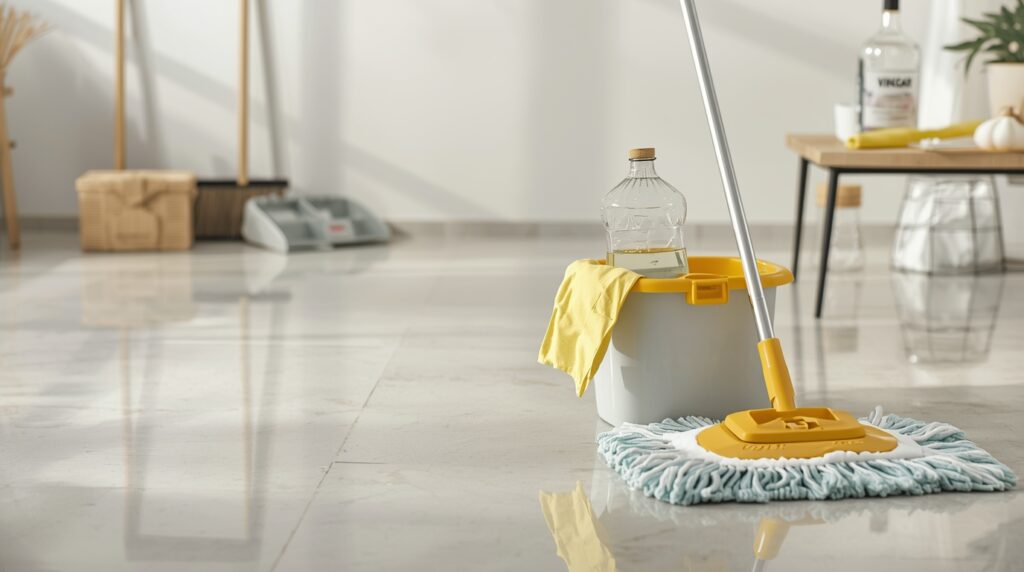
When cleaning with vinegar, it’s essential to take some safety precautions to protect both your floors and your health.
Always dilute vinegar with water before use, as undiluted vinegar can damage finishes.
Avoid using vinegar on natural stone surfaces due to its acidity.
Remember to conduct a patch test, guarantee proper ventilation, and never mix vinegar with bleach to avoid harmful fumes.
Alternative Ingredients to Enhance Your Vinegar Cleaner

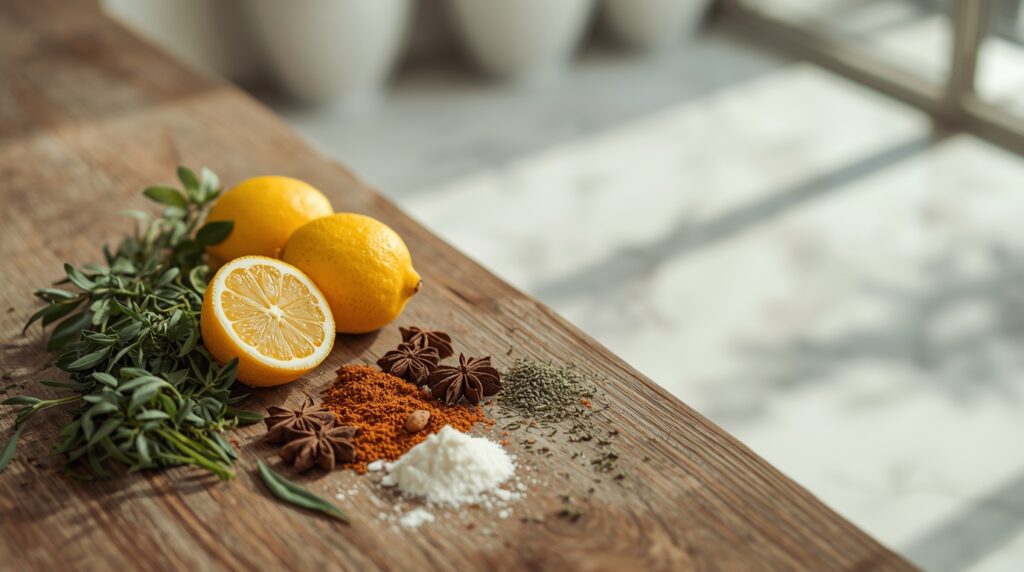
To improve your vinegar cleaning routine, consider incorporating a few alternative ingredients that can boost its effectiveness and upgrade the overall experience.
You can add essential oils for a pleasant scent, mix baking soda to lift tough stains, or even soak citrus peels in vinegar for a refreshing solution.
Just verify all ingredients are safe for your surfaces while cleaning!
Community Insights on Vinegar Cleaning

Curious about how others tackle cleaning with vinegar?
Many people swear by a vinegar-water solution for their specific floor types. For general cleaning, try mixing 1 cup of vinegar to one gallon of warm water.
If you want a fresh scent, just add a few drops of essential oils. This eco-friendly method not only cleans but also reduces the need for harsh chemicals!
Maintaining Clean Floors With Vinegar
Maintaining clean floors with vinegar is a simple yet effective way to keep your home looking fresh and inviting.
For regular cleaning, mix ½ cup of white vinegar with a gallon of warm water for tile floors and hardwood floors.
Remember, avoid using vinegar on surfaces you shouldn’t clean, like natural stone.
Incorporate this natural cleaning solution into your routine for a homemade floor you’ll love!
Frequently Asked Questions
Is It Good to Clean Floors With Vinegar?
Using vinegar’s effectiveness for cleaning floors offers benefits like streak-free luster and odor removal. It’s eco-friendly, safe for kids and pets, and cost-effective compared to commercial cleaners, but consider safety precautions for sensitive floor types.
What Is the Best Homemade Floor Cleaning Solution?
When seeking the best homemade floor cleaning solution, try mixing vinegar with water. This eco-friendly option suits various floor types, and its natural cleaning agents provide great benefits, helping you maintain cleanliness without harsh chemicals.
Can I Mop With Dawn and Vinegar?
You can use a Dawn dish soap and vinegar mixture for floor cleaning, but be cautious. To achieve a streak-free luster, stick to DIY solutions that prioritize natural cleaners without residue, enhancing your mopping tips.
What Is the Recipe for Vinegar to Clean Floors?
To clean floors effectively, mix vinegar concentration according to floor types. Consider cleaning frequency, residue concerns, and safety precautions. If you dislike the scent, try adding essential oils during mixing for a more pleasant experience.


