


When you’re selecting wall art for different rooms, it’s vital to understand how each space functions and what vibe you want to create.
Think about your personal style and how it aligns with the room’s purpose.
By considering factors like color schemes, art mediums, and even the right lighting, you can transform a simple wall into a focal point that enhances the overall atmosphere.
But before you start picking pieces, there are a few essential tips that can guide your choices more effectively. What might those tips be?
Know Your Space
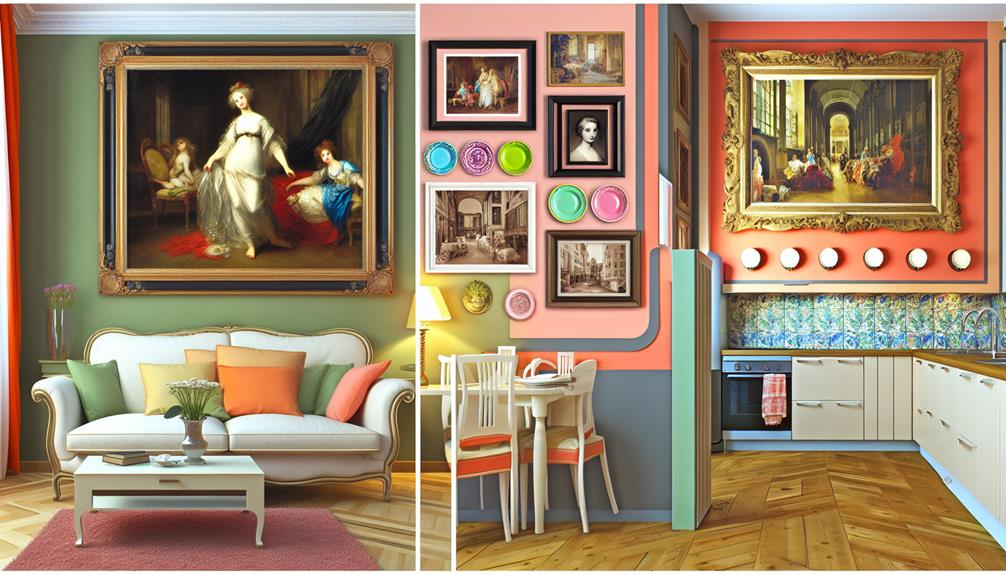

When it comes to choosing wall art, knowing your space is essential. Start by mastering measurements of your wall area; this guarantees the artwork fits and complements your room’s layout.
Oversized art pieces work wonderfully above sofas or large furniture, creating a strong focal point. In smaller spaces, opt for fewer larger frames instead of many tiny ones; this reduces visual clutter and makes the area feel more open.
Identify key features, like a fireplace, to enhance your decor and draw attention to your perfect piece of art. Consider the rustic and farmhouse style you’re aiming for, as it can greatly impact the overall aesthetic of your space.
Define Your Personal Style
Your personal taste plays an essential role in selecting art that truly reflects who you are.
Take the time to explore various styles, from abstract to classic, and see which ones resonate with you the most.
For instance, if you’re drawn to eclectic decor, consider mixing and matching different prints, like the Decor Vintage Eclectic Wall Art Prints vintage eclectic decor, to create a unique look.
Personal Taste Matters
Personal taste is an essential compass in the world of wall art, guiding you toward pieces that resonate with your unique aesthetic sensibilities.
Recognizing your personal taste is important for successful artwork selection. Familiarizing yourself with different art styles, like mid-century modern or Scandinavian, can help you pinpoint what truly appeals to you.
Explore galleries, online platforms, and social media to discover what sparks your interest. Remember, art is subjective; what you love mightn’t resonate with someone else.
Trusting your instincts is crucial in this process. Don’t hesitate to experiment by rearranging art pieces in your space; this can deepen your understanding of your preferences and lead to new insights into your personal style.
Explore Various Styles
Art styles can transform a room, making it essential to explore various options to define your personal style. Start by considering your preferences in different mediums, like photography, abstract art, or graphic designs. Familiarizing yourself with terms helps articulate what you love.
Here’s a quick guide to help you explore various styles:
| Style | Features | Best For |
|---|---|---|
| Mid-Century Modern | Retro patterns, clean lines | Living rooms |
| Scandinavian | Fine lines, minimalism | Bedrooms |
| Abstract | Colorful, non-representational | Offices or studios |
Mixing styles can create a dynamic atmosphere, allowing personal expression through original artwork. Ultimately, choose art for your home that resonates with the space and reflects who you are!
Consider Your Colours


When you’re picking wall art, start by evaluating your current color palette to guarantee everything feels cohesive.
You can either complement warm tones with similar shades or introduce contrasting colors for a bold look, especially in larger pieces.
Neutral color palettes and vintage finishes like those found in farmhouse decor can create a harmonious atmosphere.
Don’t forget that subtle hints of color in your artwork can tie your decor together beautifully, creating a unified and inviting space.
Assess Existing Color Palette
Before diving into the world of wall art, take a moment to evaluate the existing color palette of your room. This step is vital to guarantee that the artwork enhances your space.
Use a color wheel to identify complementary colors that work well with your furnishings. For vibrant rooms, look for art that incorporates similar tones to maintain visual harmony. In contrast, neutral spaces can handle bold or contrasting choices, allowing your art to stand out.
Additionally, consider how colors impact emotions; soft pastels can create tranquility in bedrooms, while bright hues can energize kitchens.
Complement or Contrast Choices
Choosing wall art is all about the interplay between your room’s colors and the artwork itself. Start by evaluating your existing color palette.
If your space has warm tones, select wall hangings that feature similar shades to create a cozy vibe. Alternatively, you might opt for contrasting artwork with bold colors—this can make your art display stand out and draw attention to specific areas.
When choosing pieces, focus on complementary colors rather than exact matches; this approach adds visual interest and depth. Additionally, incorporating subtle color hints from your decor into the artwork helps tie everything together, creating a balanced look that enhances your overall aesthetic.
Subtle Hints in Artwork
Subtle hints in artwork can transform a room by tying together various design elements.
Before you choose an art piece, assess your current or desired color palette to guarantee it harmonizes with your space. Using complementary colors can enhance the room’s ambiance, creating a cohesive look that ties the decor together.
Consider incorporating subtle color hints from existing furnishings into your artwork for a more integrated feel. In vibrant rooms, opt for art pieces that include these complementary colors to maintain balance and visual interest.
For neutral spaces, bold artwork can add a pop of color, creating a striking focal point that draws the eye.
Choose the Right Medium
Understanding the different mediums available can greatly enhance your wall art selection process.
When you choose art, consider how mediums like original paintings, mixed-media, and prints impact both texture and price points. Original paintings often showcase unique details but can start around £800, making them a significant investment.
If you’re on a budget, prints provide a fantastic alternative, allowing you to enjoy beautiful art without overspending.
For areas prone to moisture, like bathrooms, opt for resilient mediums such as acrylic or glass-framed options.
Get Your Lighting Right


Getting the lighting right can transform your wall art from ordinary to extraordinary. Proper lighting enhances visibility, allowing the colors and textures of your artwork to shine.
Here are some tips to take into account:
- Use picture rails or spotlights to highlight key pieces.
- Position artwork near natural light sources for dynamic effects.
- Choose warm LED bulbs to create an inviting atmosphere.
- Be mindful of lighting angles, as they change throughout the day.
When you strategically place your artwork, you’ll maximize its impact and create a more engaging viewing experience.
Quality lighting not only showcases your artwork but also elevates the overall ambiance of any room, making it a vital element in your wall art selection process.
Select Appropriate Frames
After you’ve set the right lighting, the next step is to select appropriate frames for your artwork.
Consider the type of piece you have; canvases often look better unframed, while prints usually require frames for a polished look.
When framing artwork, choose frames that match the tones and textures of your living room, ensuring a cohesive aesthetic throughout the space.
Don’t hesitate to experiment with different styles, like modern, vintage, or rustic, to add a personal touch.
Remember, ready-to-hang artwork can save time and still maintain a cohesive look.
Proper framing not only protects your art but also enhances its visual appeal, with high-quality frames elevating the overall perception and integration of the artwork within the room.
Room-Specific Art Selection
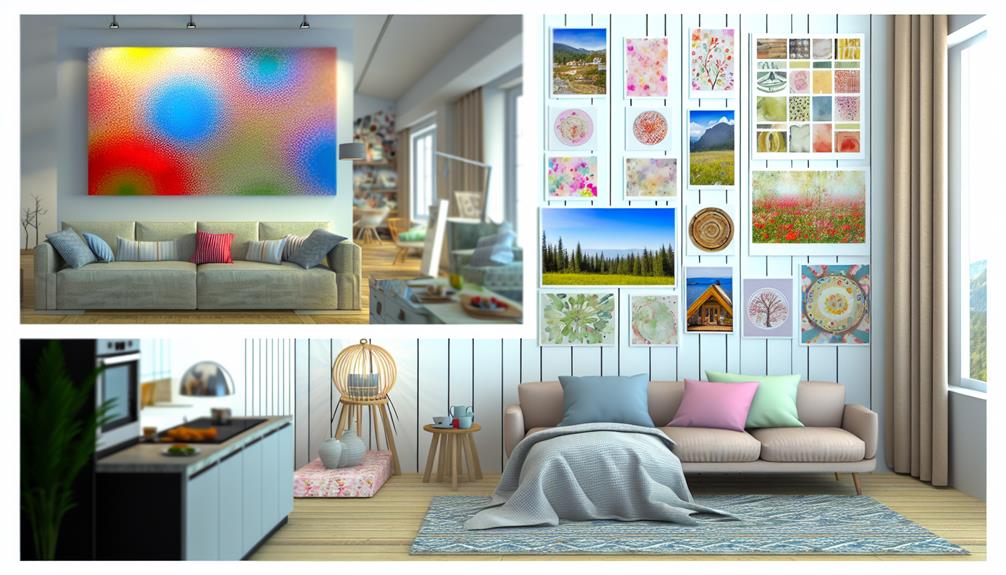

Art selection tailored to each room enhances the overall atmosphere and functionality of your living space.
When you’re finding the perfect art for your living room, consider large wall hangings or a gallery wall to spark conversation.
For bedrooms, calming pieces like nature scenes create a relaxing vibe, ideally hung above the bed.
In kitchens, use quirky or food-themed prints to match your decor without overwhelming limited space.
Children’s rooms should feature playful art that reflects their interests and is safe, using lightweight materials.
Finally, in bathrooms, choose small-scale art with soothing or humorous motifs that can endure humidity, inviting you to take a closer look.
- Large canvas prints for a bold statement
- Nature scenes for tranquility
- Quirky prints for personality
- Playful murals for kids
Explore Affordable Art Options
Affordable wall art can transform your space without breaking the bank. Big box stores like Target and West Elm offer a variety of affordable art options that cater to different styles.
You can also explore online platforms like Etsy and Chairish, where unique art pieces are available at budget-friendly prices. Websites such as Minted and Lulu & Georgia specialize in affordable art prints from independent artists, ensuring you find something special.
Don’t overlook local flea markets and thrift stores, which can be treasure troves for one-of-a-kind finds.
If you’re feeling creative, consider DIY abstract art projects. These allow you to create personalized pieces on a budget, and professional framing can elevate your homemade artwork beautifully.
Frequently Asked Questions
How to Choose Art for Each Room of Your Home?
When choosing art for each room, consider the room’s function and your personal preferences. Match the art style to create a focal point, ensuring it enhances the space and resonates with your unique taste.
How Do You Match Different Wall Art?
Matching different wall art’s a breeze, right? Focus on art style, size consideration, and theme coherence. Don’t forget your personal connection—after all, it’s your space, and your taste should shine through!
What Is the Best Way to Arrange Art on a Wall?
To arrange art on a wall, create a gallery wall that balances symmetry with varied heights. Establish a focal point by positioning key pieces at eye level, ensuring your arrangement feels cohesive and visually appealing.
Should Wall Art Match Room Colors?
You might think wall art should match room colors for harmony, but it’s actually about enhancing mood and showcasing personal style. Bold contrasts can create stunning focal points, adding depth and interest to your space.


